Setting out on the NC Black Heritage Tour through Eastern North Carolina, we expected to learn something new. What we did not expect was how often we would find ourselves standing in places that felt quietly monumental. Not grand in appearance, necessarily, but powerful all the same.
Stretching across nine counties and more than thirty sites, the tour traces the lives and legacies of African Americans who built businesses, founded schools, led movements, fought for freedom, and shaped communities across this part of the state. Some of these places are marked and preserved. Others are easy to pass without realizing what happened there. Together, they form something larger than a trail. They create a living map of courage, perseverance, and progress in coastal North Carolina.
Williamston | Where Faith Met Action
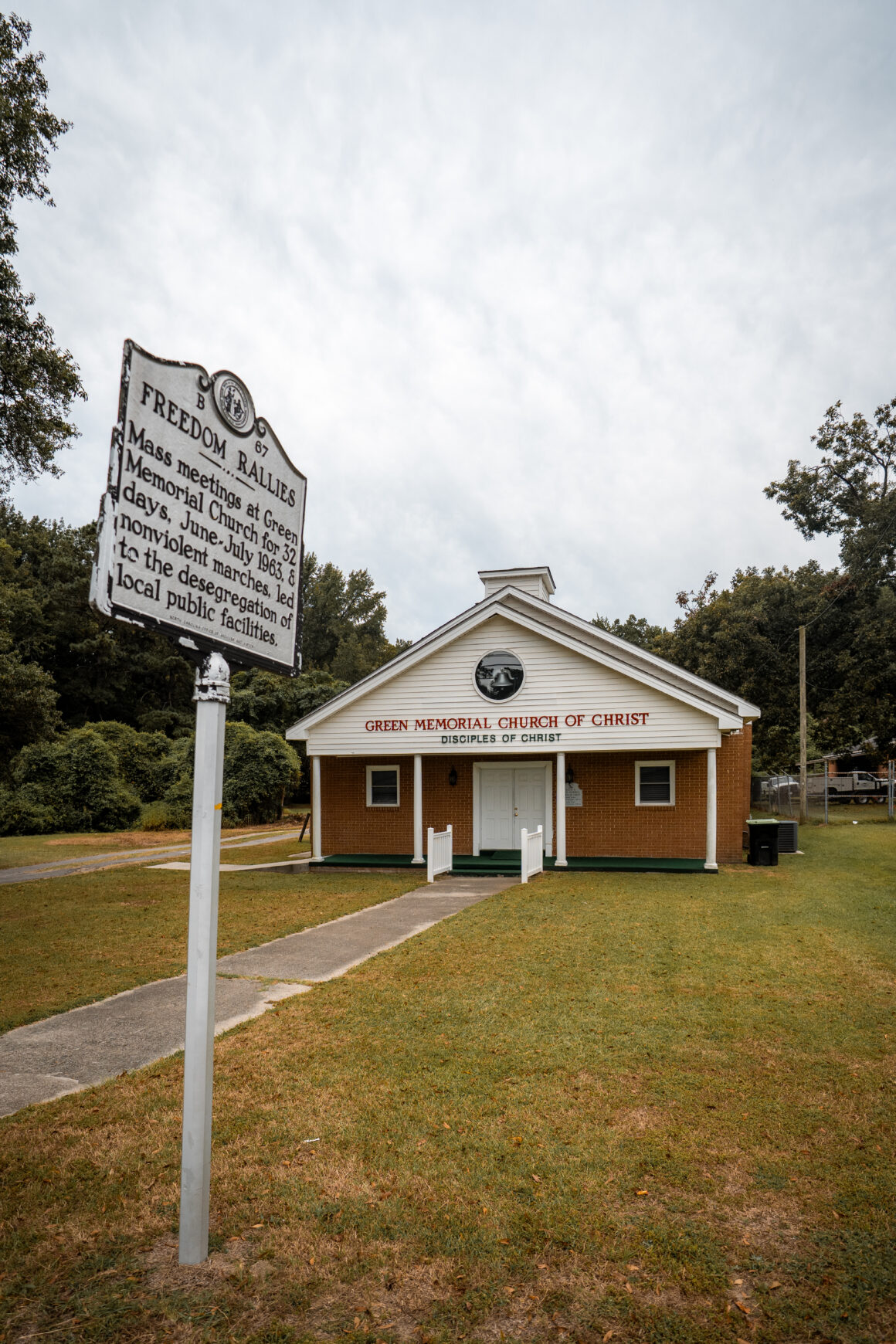
In Williamston, that history begins with faith and action. Green Memorial Church of Christ still stands as a reminder of the role churches played during the civil rights era, not only as places of worship, but as places of organizing, planning, and resolve. It was here that Freedom Rallies and meetings once helped move a community forward. Standing outside, it was easy to imagine the determination that filled the room.
Edenton & Hertford | Enterprise, Escape, and Education
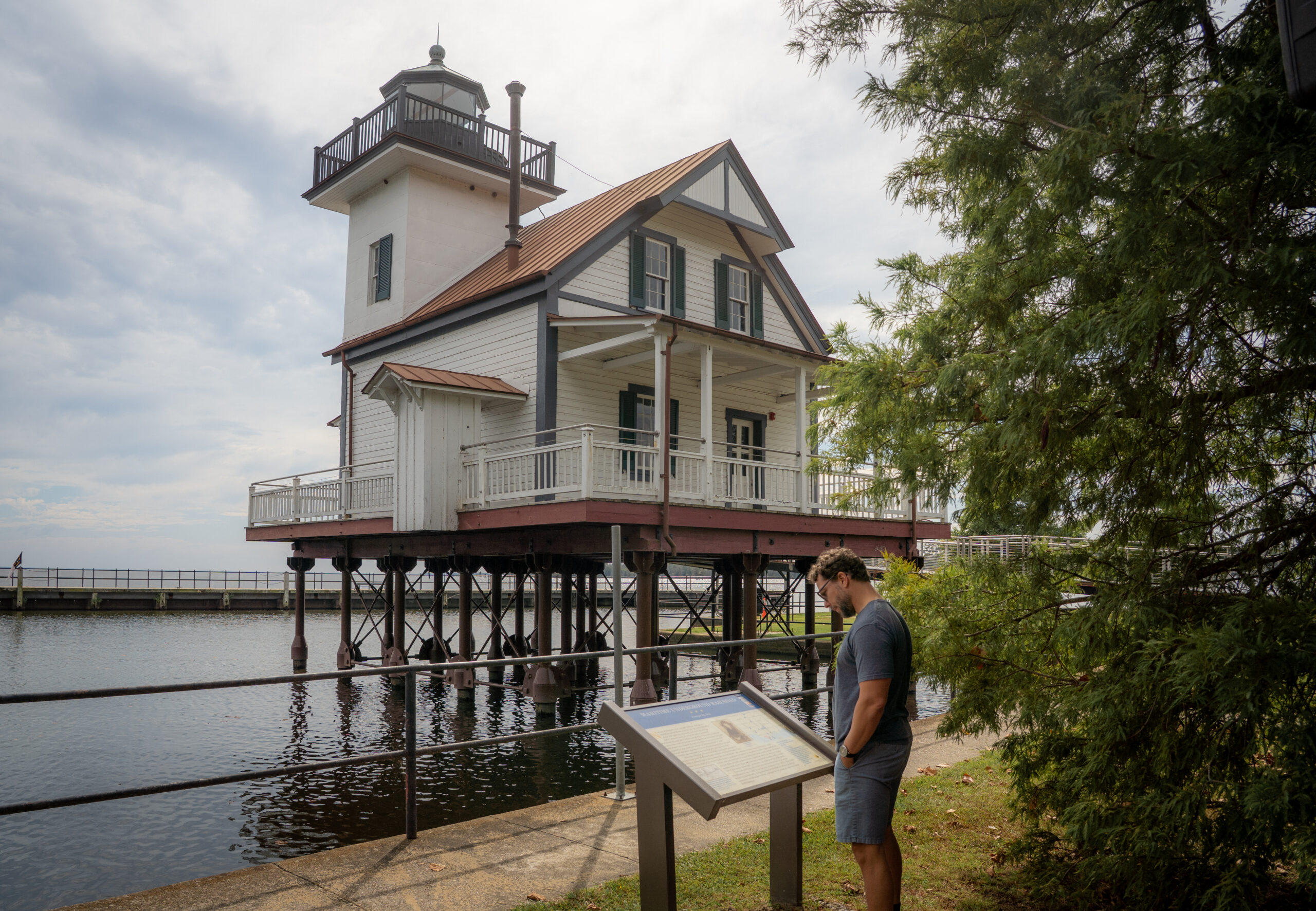
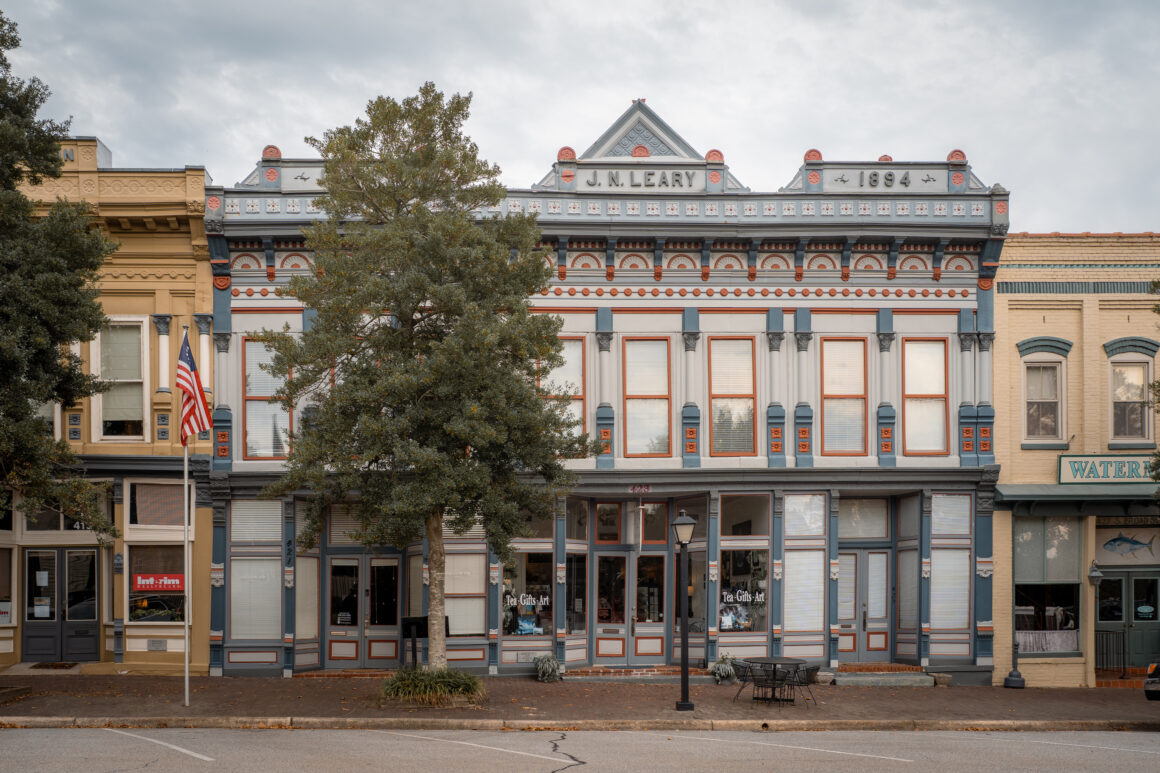
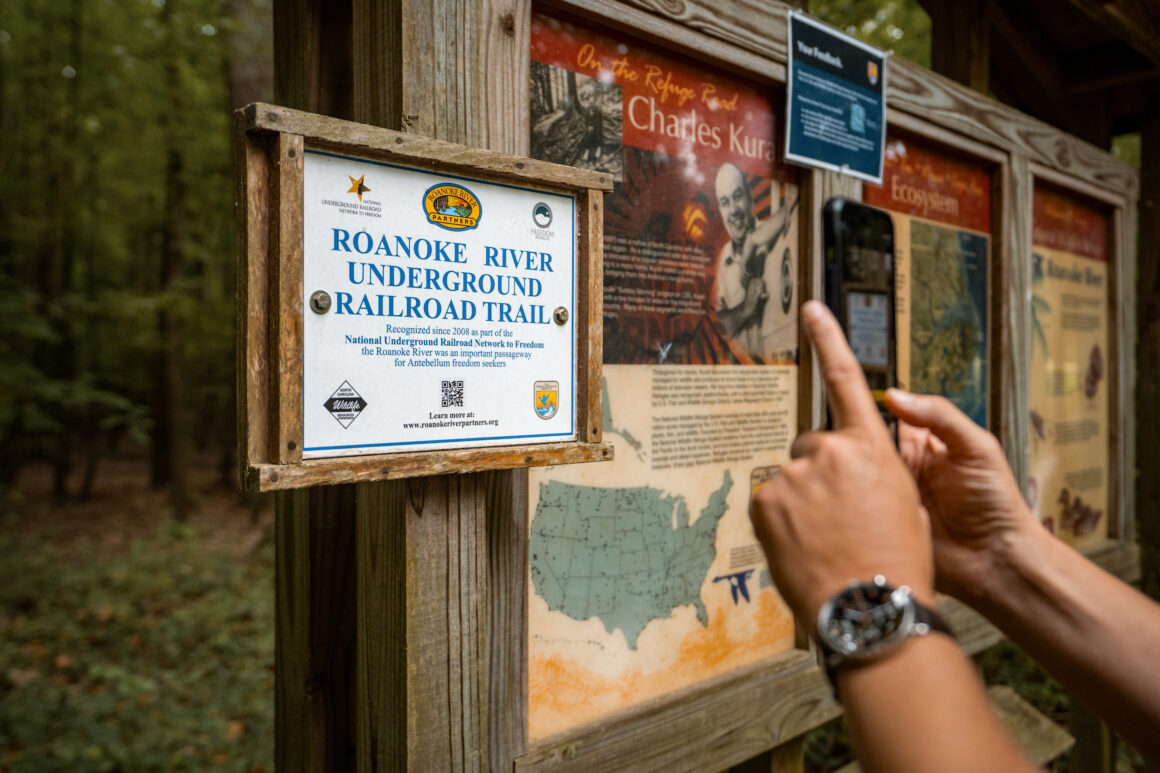
From there, the trail leads to Edenton, where the stories of enterprise and escape sit side by side. Near the Roanoke River Lighthouse, the Maritime Underground Railroad Trail tells the story of freedom seekers who escaped by water, slipping away under cover of darkness toward an uncertain but hopeful future. Nearby, the Josephine Napoleon Leary Building stands as a different kind of marker. Born into slavery, Leary became a successful real estate developer, and the building that bears her name remains a lasting symbol of determination and ownership.
Not far away in Hertford, the legacy of education comes into focus. A site honoring Beulah and Lillie Burke commemorates the sisters who helped found the first Greek-letter sorority for African American collegiate women in 1908. Their story is a reminder that classrooms, conversation, and access to education have long been powerful tools for change.
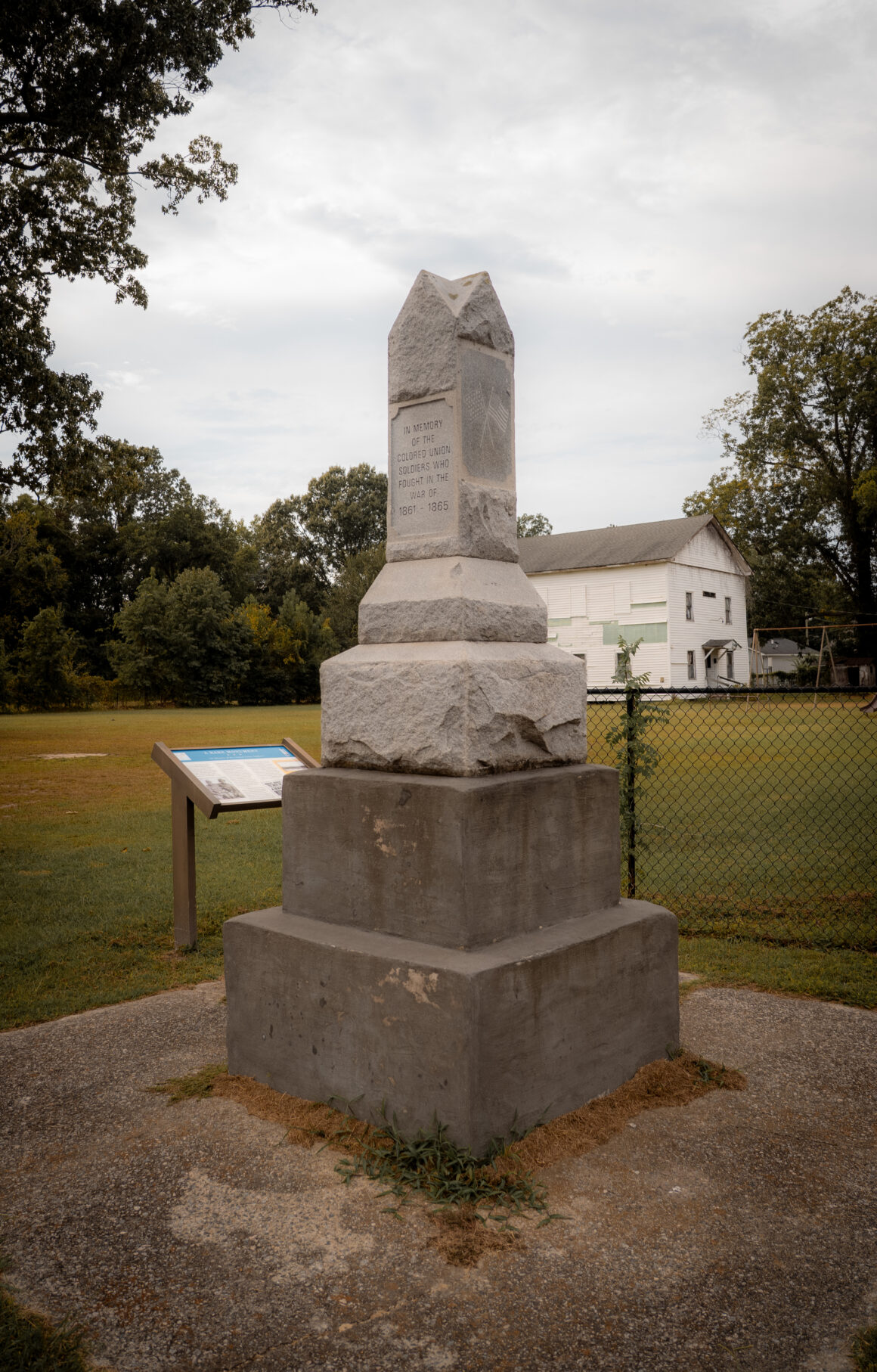
Before leaving the area, a stop at the Colored Union Soldiers Statue brings another chapter of history into view, honoring men who fought for freedom in a nation that had not yet granted them full equality.
Elizabeth City | Conflict and Progress Side by Side
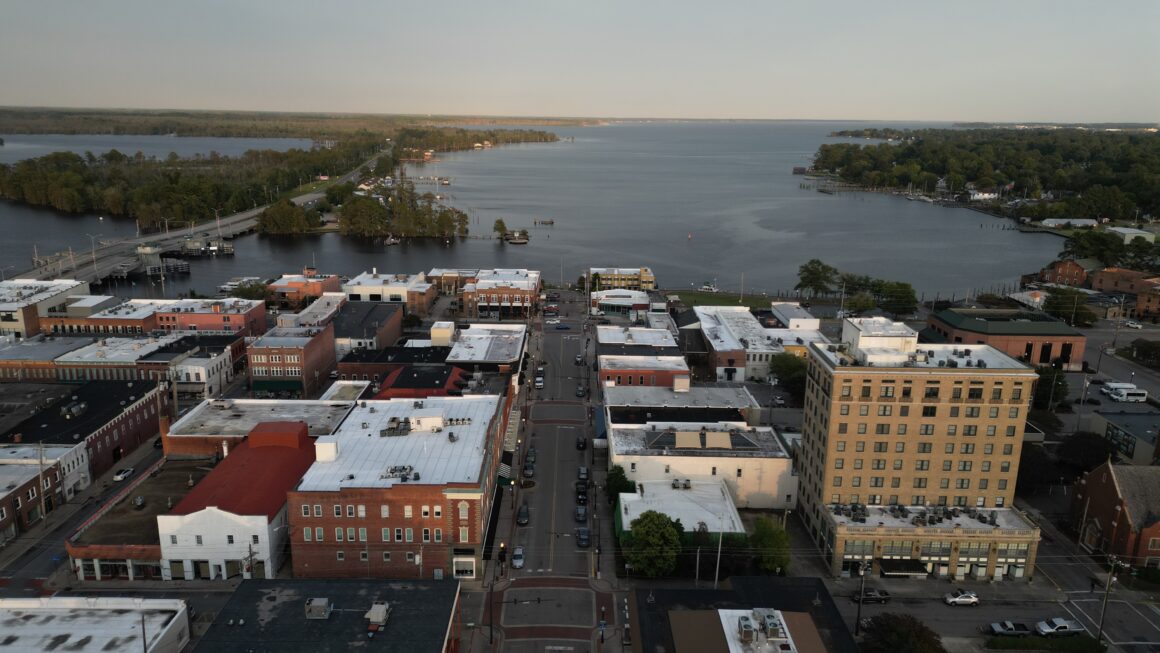
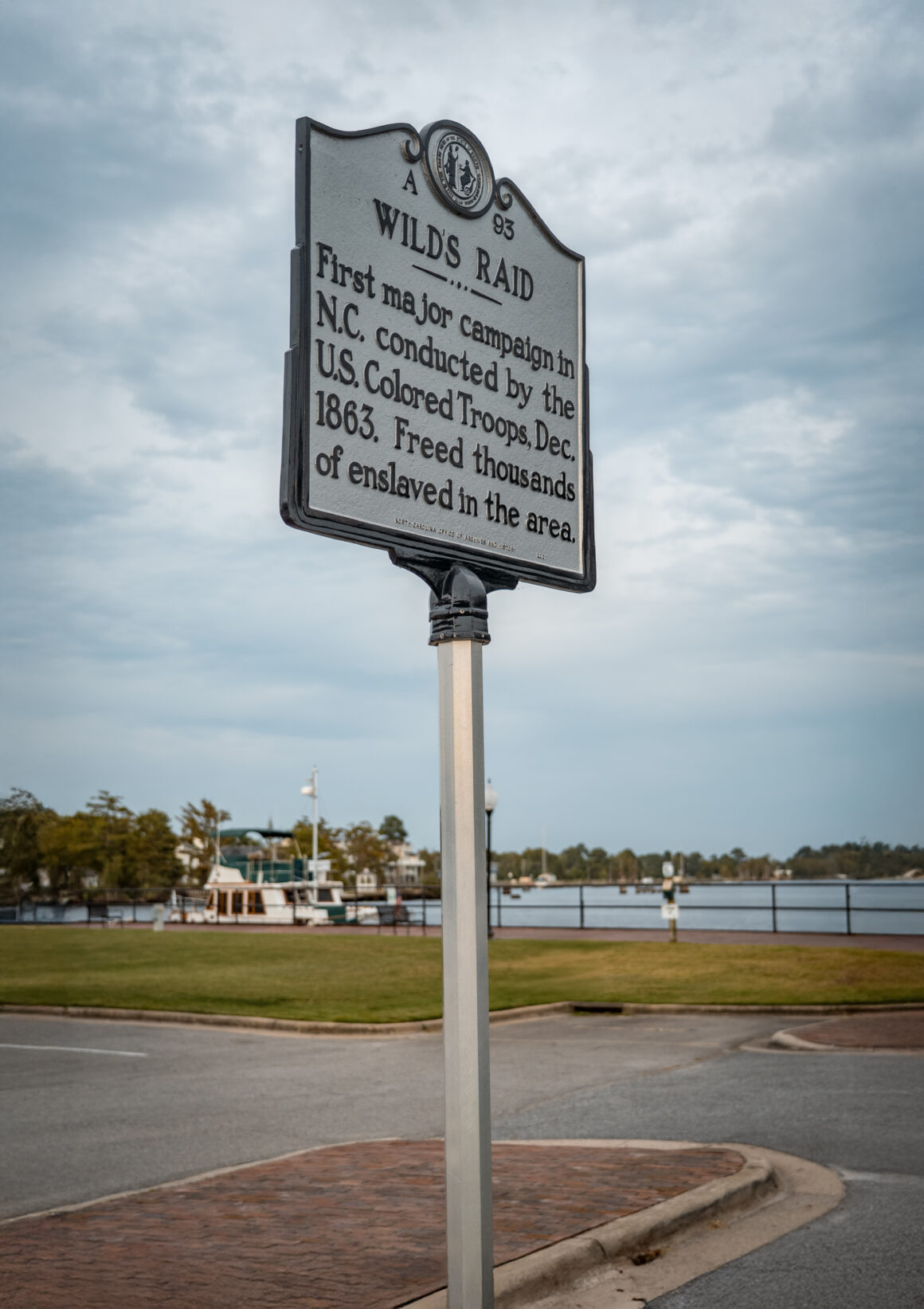
Elizabeth City carries the weight of both conflict and progress. At the Wild’s Raid monument, visitors encounter the story of a campaign led by U.S. Colored Troops in 1863 that helped free thousands throughout the region. Elsewhere in town, the A Town Divided marker reflects on the tensions that emerged when Union troops arrived, showing how deeply the war shaped local lives and loyalties.
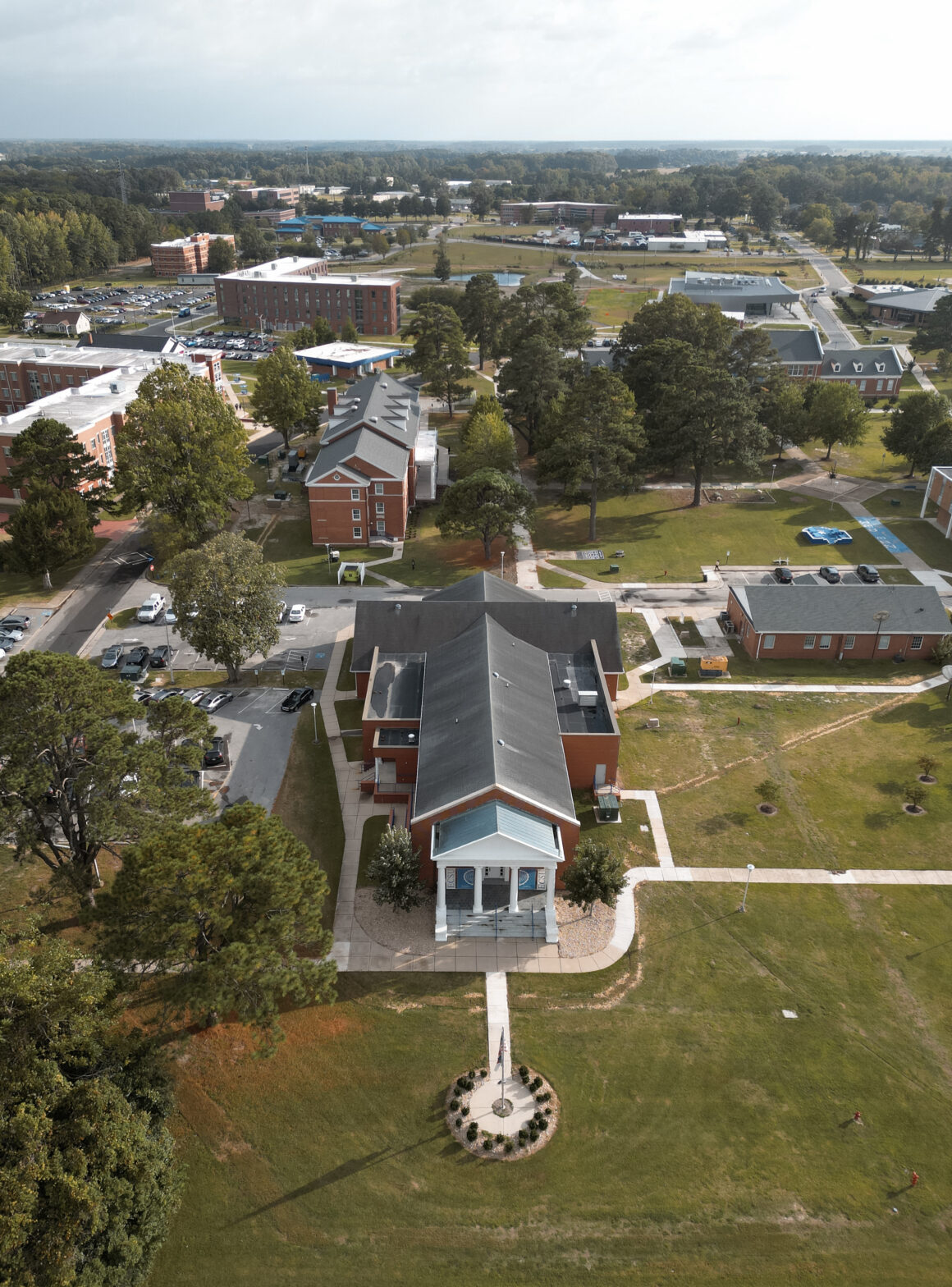
The Citizen Bank Building adds another layer to the story. As the first Black-owned bank in eastern North Carolina, it represented access, independence, and opportunity during a time when all three were often denied. That same spirit continues at Elizabeth City State University, founded in 1891 to educate Black teachers and still serving as a cornerstone of leadership and higher education in the region today.
Currituck Mainland | Classrooms That Carried Communities
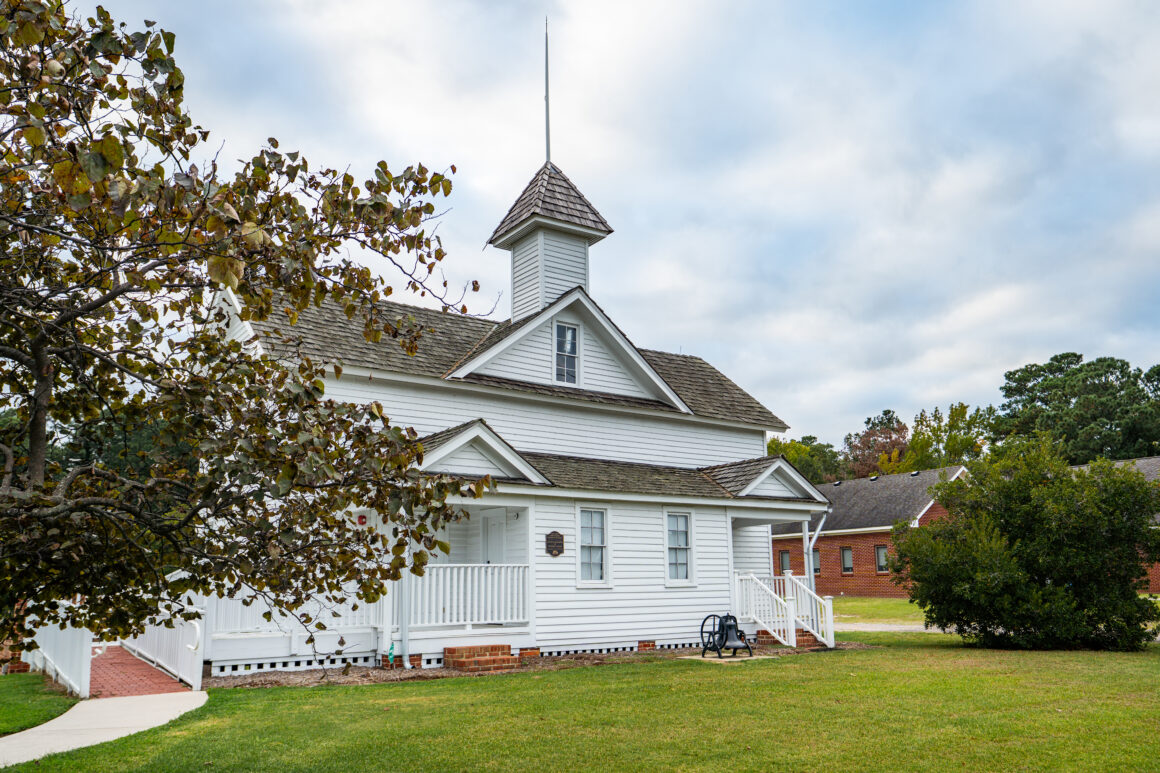
Heading toward the Currituck mainland, the landscape opens into farmland and crossroads communities where education once served as the center of community life. Sites like the Currituck Union School, McBride Colored School, and Jarvisburg Colored School speak to the determination of Black families and teachers who insisted on learning despite limited resources and systemic barriers.
Jarvisburg, built in 1868 on land donated by William Hunt Sr., is especially moving. Restored classrooms and preserved details make it easier to grasp what this place once meant to the generations of students who passed through its doors.
Nearby in South Mills, the Pathway to Freedom at the Great Dismal Swamp tells one of the most haunting stories on the trail. The swamp served as a refuge for people escaping slavery, offering shelter deep within an unforgiving landscape. Archaeological evidence has revealed communities that once survived there, hidden among the trees and water.
Standing at the site today, the contrast is striking. It is beautiful, still, and heavy with the knowledge of what survival once required in a place like this.
Roanoke Island | Freedom Built by Hand
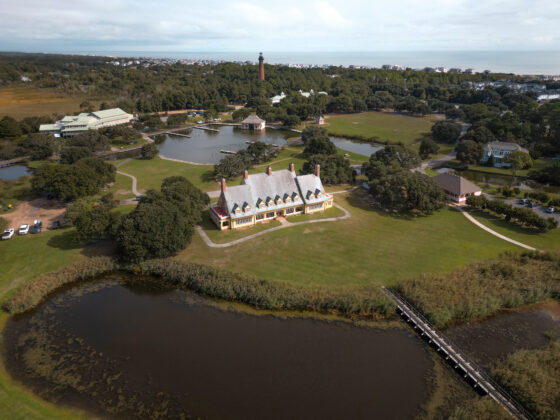
On Roanoke Island, the tour turns toward stories of freedom and the sea. Near the Elizabethan Gardens, the Freedom Trail traces the former site of the Freedmen’s Colony, where more than 3,500 formerly enslaved people built homes, churches, and schools between 1862 and 1867. Though the colony was officially dissolved after five years, many of its residents remained, laying foundations for generations of Black families on the Outer Banks.
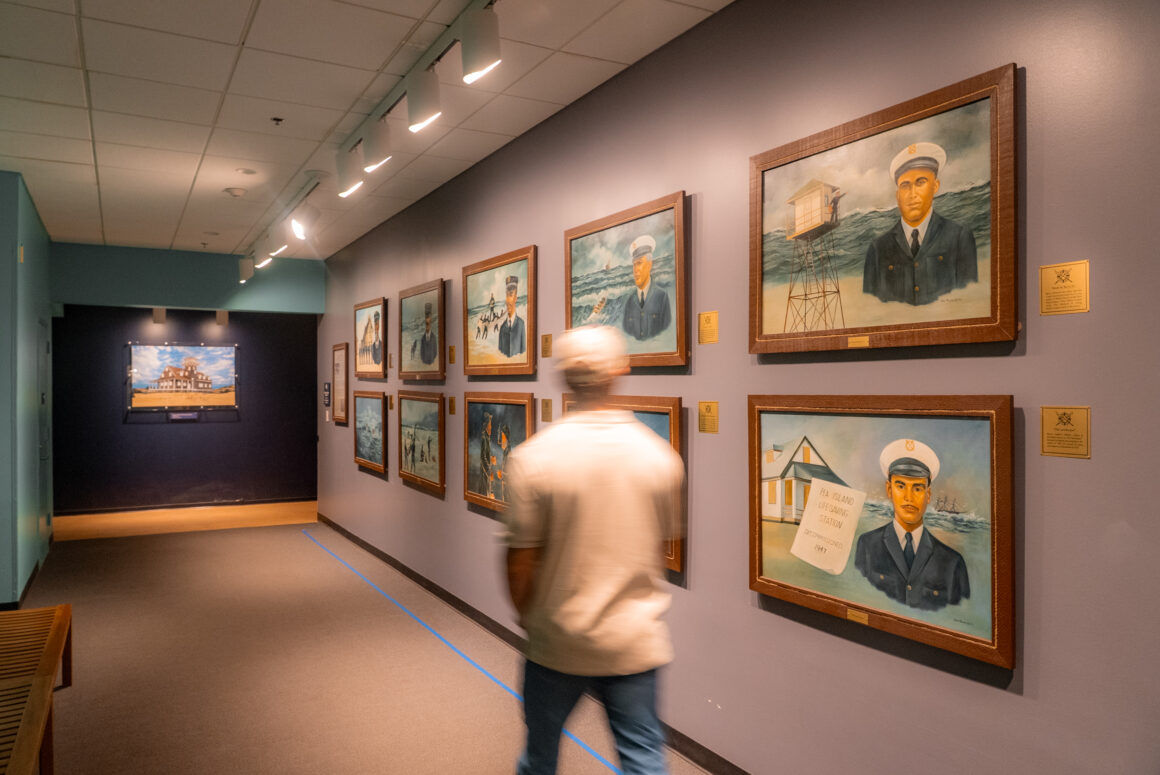
Roanoke Island is also central to the story of Richard Etheridge, the first African American keeper in the U.S. Life-Saving Service. At the Pea Island Life-Saving Station, Etheridge and his all-Black crew carried out one of the most extraordinary rescues in North Carolina history, saving every person aboard the E.S. Newman during a hurricane in 1896.
Legacy Along the Water | Stories That Endure
Their legacy continues nearby at the Herbert M. Collins Boathouse and at the North Carolina Aquarium on Roanoke Island, where James Melvin’s painting Freedmen, Surfmen, Heroes brings together the stories of Richard and Patrick Etheridge in one powerful image. It is a reminder that recognition may come late, but these stories endure.
Hatteras Island | The First Refuge
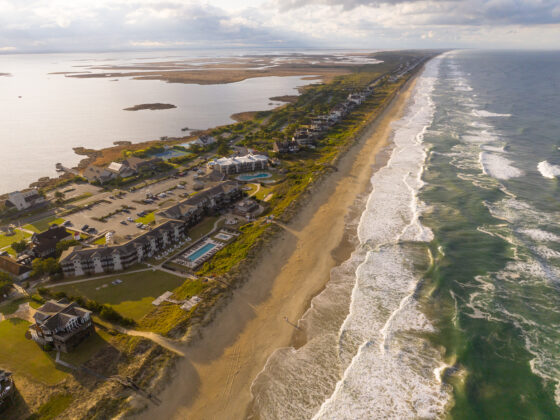
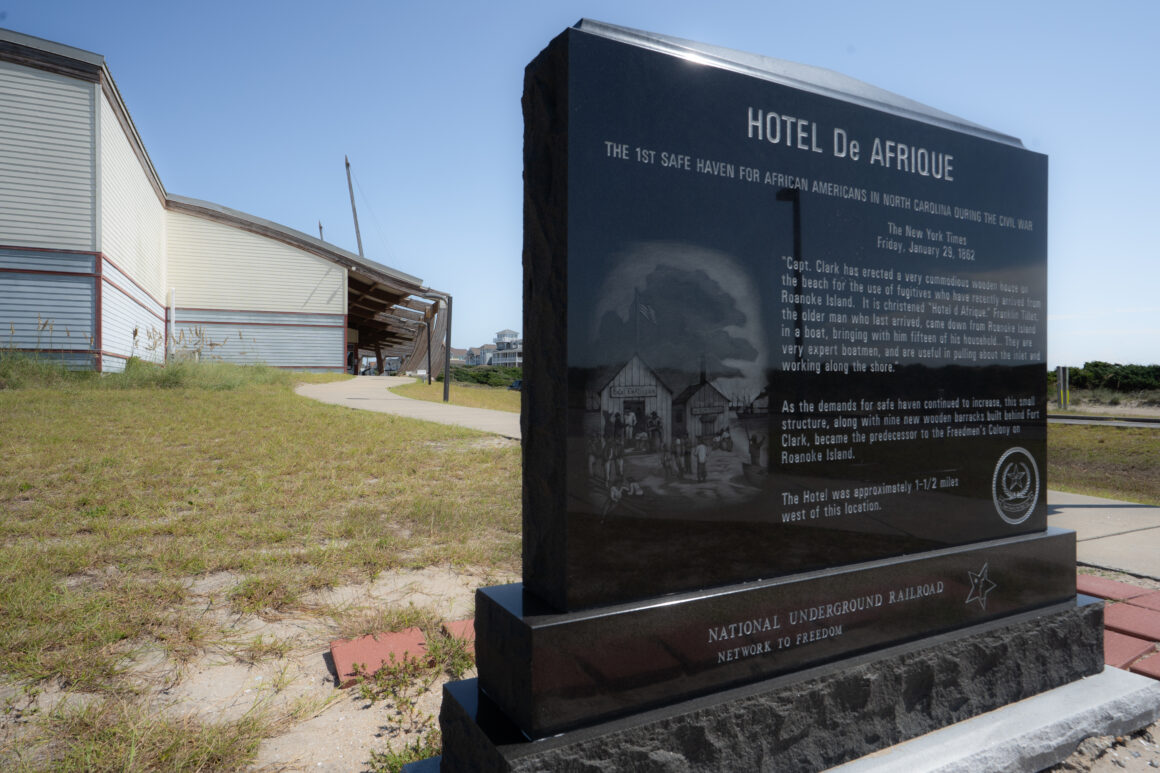
Farther south on Hatteras Island, near Pole Road, sits one of the trail’s quietest but most significant stops: the site of the Hotel De Afrique. During the Civil War, it became the first safe haven in North Carolina for African Americans who had escaped slavery and reached Union protection.
The building itself is gone, but the place still carries weight. With the wind moving across the sand and sea nearby, it is not difficult to imagine the uncertainty, relief, and resolve of the families who arrived there in search of a different future.
The Road Continues
Traveling the NC Black Heritage Tour changes the way you move through Eastern North Carolina. It reminds you that history is not confined to museums or textbooks. It lives in schoolhouses and church walls, along shorelines and town streets, in places people pass every day without fully knowing what happened there.
That is what makes this trail so meaningful. It does more than preserve the past. It asks us to pay attention. To slow down. To understand that these stories are not separate from North Carolina’s identity. They are essential to it. The trail is not just something to follow. It is something to carry forward.